June 2020 Article Archives
The Harvest of Data: How AI is Transforming Agricultural Cooperatives
Artificial intelligence is fundamentally reshaping the landscape of modern farming, and agricultural cooperatives (co-ops) are uniquely positioned to lead this transition. By pooling resources, data, and collective bargaining power, co-ops are using AI to ensure that small and medium-sized producers can compete in an increasingly tech-driven global market. Precision Agriculture at Scale The most immediate impact of AI on co-ops is in precision ...
Read More
Beyond the Annual Budget: Why Electric Cooperatives Need to Start Planning in Scenarios
The Budget Is Not Dead. But It May Need a New Job. Every fall, a familiar ritual begins in electric cooperative finance departments across the country. Spreadsheets multiply. Department managers receive budget templates. Finance sends reminders. Managers send back questions. Finance sends the templates back because a column was missed. Someone discovers that a vehicle was budgeted twice. Someone else remembers a major project that somehow ...
Read More.png)
The Cooperative Accountant Fall 2026
The Fall 2026 issue of The Cooperative Accountant (TCA) has been released! Focusing on cooperative-related issues, such as accounting and auditing, finance, cooperative management, legal and regulatory issues and taxation, this journal has become widely recognized as the industry standard. NSAC members, please log into Connect to view or download the latest issue.
Read More
NSAC Announces Nominations are Open for the 2027 Silver Bowl Award
We’re thrilled to share that nominations are now open for NSAC’s most prestigious honor! We invite you to nominate an outstanding professional for the 2027 Silver Bowl Award. Since its inception in 1960, the Silver Bowl has been bestowed by NSAC leaders upon individuals who have distinguished themselves through long-term contributions that significantly elevate the fields of accounting, tax, and finance within the cooperative ...
Read More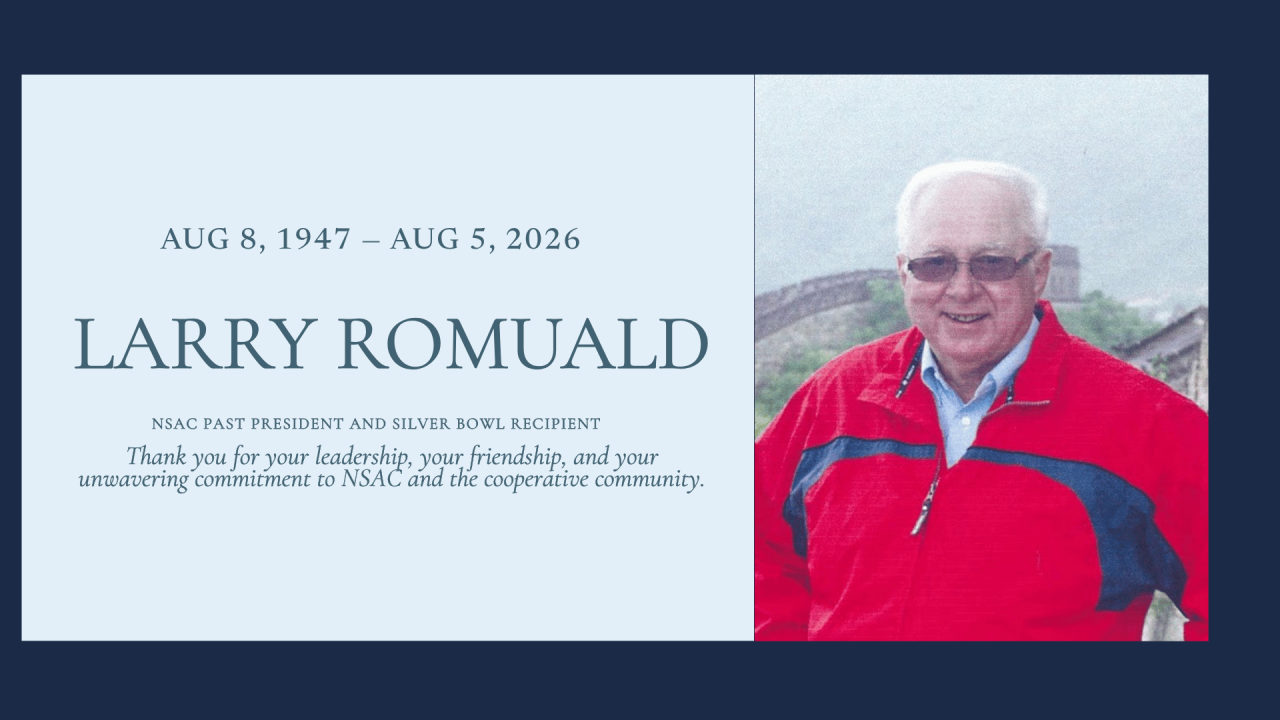
Honoring the Life and Legacy of Larry Romuald
It is with great sadness that we share the passing of Larry Romuald, a devoted leader, mentor, and friend to NSAC and so many throughout the cooperative community. Larry dedicated 42 years of his career to serving agricultural cooperatives, but those who knew him will remember him for far more than his professional accomplishments. He was a trusted advisor, a thoughtful leader, and someone who generously shared his knowledge and experience with ...
Read More