Mission Statement
NSAC serves cooperatives by providing accounting, tax and business education uniquely tailored to professionals working for and with cooperatives; providing networking and professional development opportunities for members, prospective members and others supporting the cooperative sector; and participating in standard-setting and implementation processes enabling members to effectively apply those accounting standards.
Goals
- Providing a superior membership experience through continuing EDUCATION on timely topics, issues and relevant information.
- Rededicating an expanded list of RESOURCES nationally and throughout the chapters, in support of recruiting and retaining members.
- Developing increased opportunities for networking and professional CONNECTIONS within the membership and with focused outreach to those new to the profession, throughout the industry and within the experienced cooperative arena.
Upcoming Events
.png)
NSAC 2026 Knowledge Exchange
What is the Knowledge Exchange? Not a Conference. Not a Presentation. More than a Roundtable. Have you ever sat in a conference session wishing you could ask a follow-up question directly related to your cooperative? Wondered how other cooperatives are addressing the same challenge you’re facing? Or wished you could hear what industry experts would say about your situation? That’s exactly what the NSAC Knowledge Exchange is ...
More Information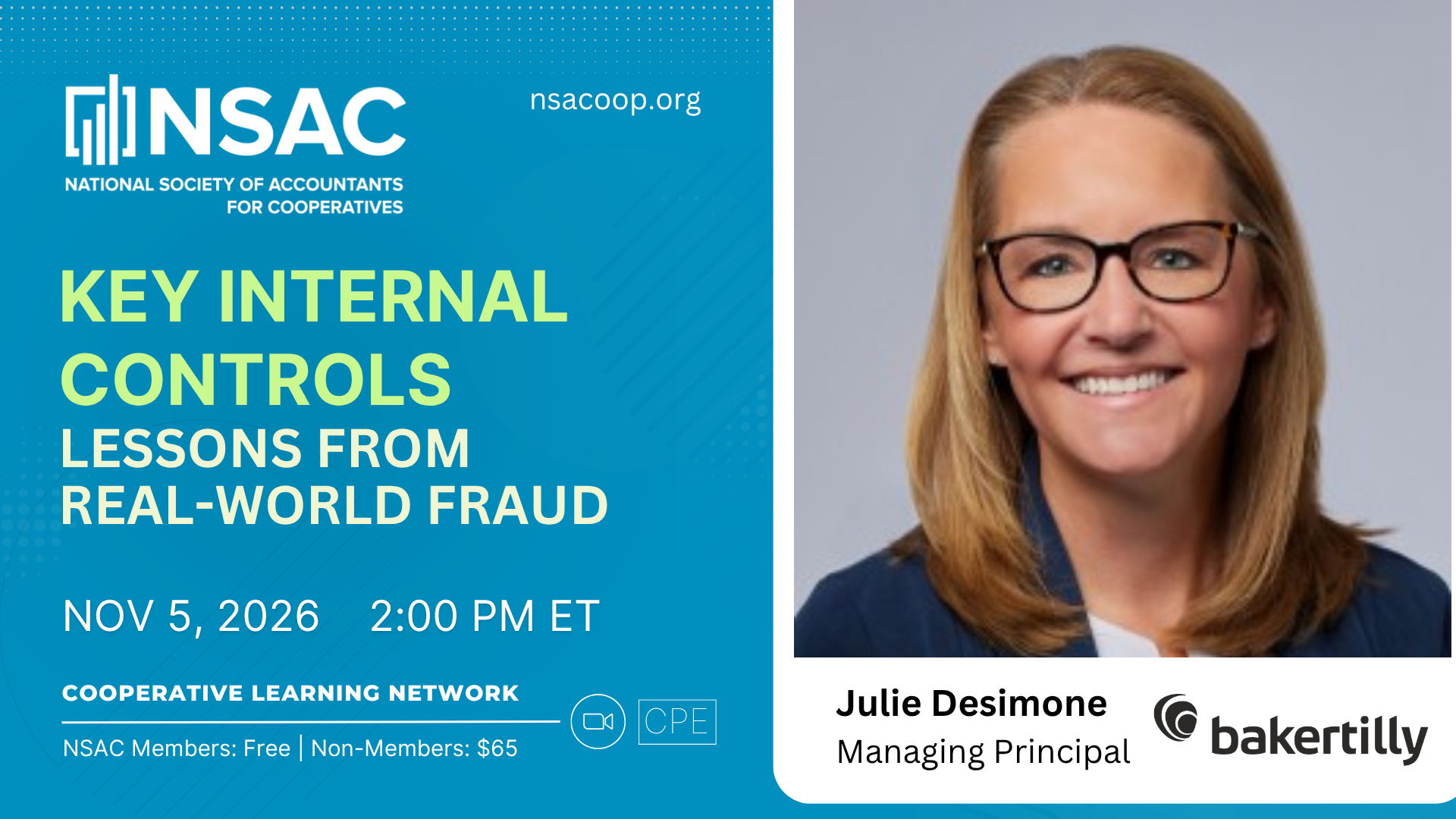
Key Internal Controls: Lessons from Real-World Fraud
If you think your organization is too vigilant to fall victim to fraud, the case studies in this session may surprise you! We'll take an eye-opening look at the schemes and warning signs affecting cooperatives right now, from classic internal abuses to fast-moving trends in cyber risk and shifting workforce dynamics. Participants will explore the internal control components that matter most and see how gaps in everyday processes can quietly open ...
More Information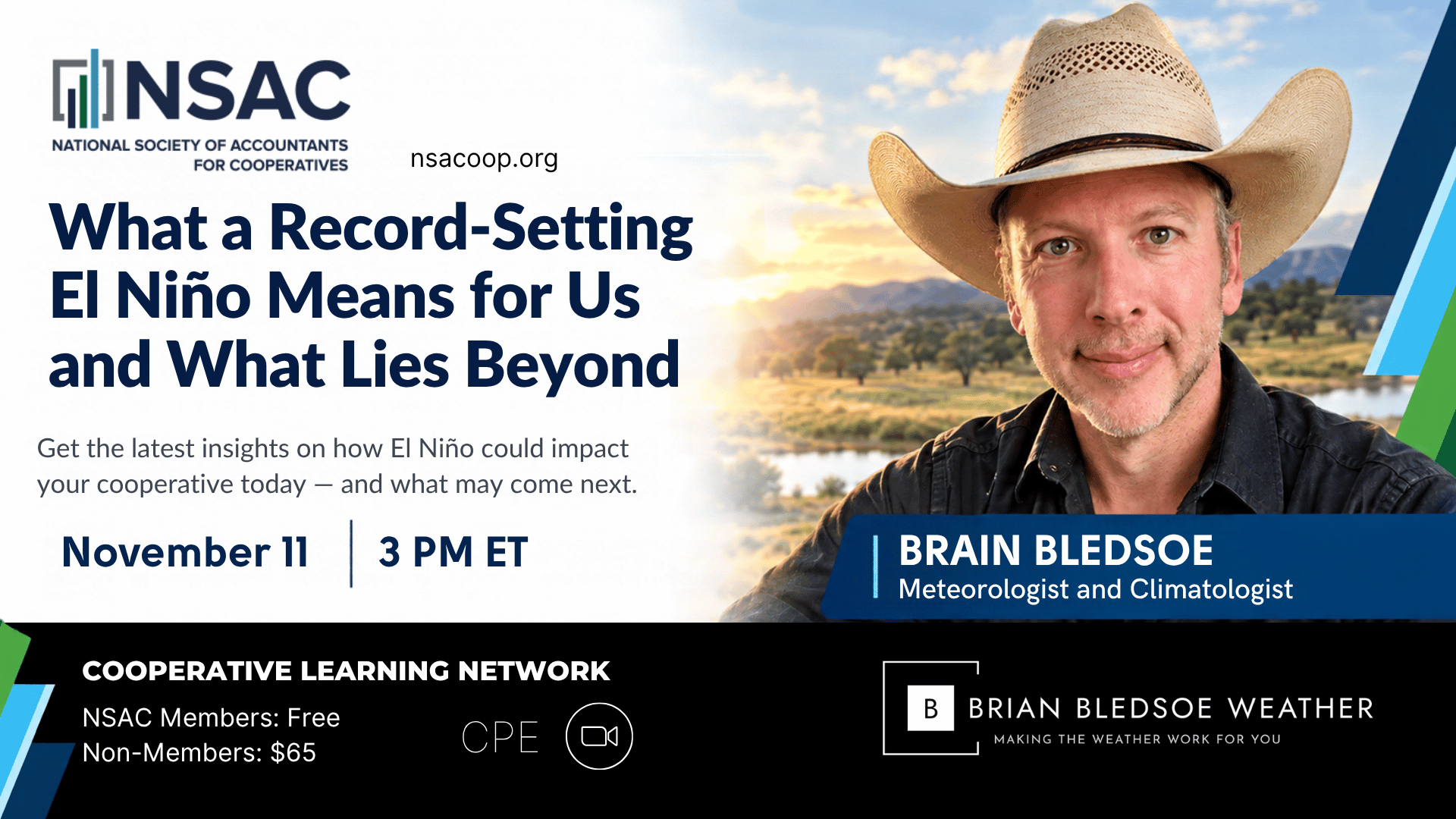
What a Record-Setting El Niño Means for Cooperatives and What Lies Ahead
How could changing weather patterns affect your cooperative in the months ahead? In this session, Brian Bledsoe, meteorologist and climatologist, will provide an overview of the long-range and seasonal weather outlook, exploring what the current record-setting El Niño could mean for agricultural, electric, and other cooperatives. From potential impacts on growing conditions and agricultural production to electricity demand and ...
More InformationRecent Happenings
The Harvest of Data: How AI is Transforming Agricultural Cooperatives
Artificial intelligence is fundamentally reshaping the landscape of modern farming, and agricultural cooperatives (co-ops) are uniquely positioned to lead this transition. By pooling resources, data, and collective bargaining power, co-ops are using AI to ensure that small and medium-sized producers can compete in an increasingly tech-driven global market. Precision Agriculture at Scale The most immediate impact of AI on co-ops is in precision ...
More Information
Beyond the Annual Budget: Why Electric Cooperatives Need to Start Planning in Scenarios
The Budget Is Not Dead. But It May Need a New Job. Every fall, a familiar ritual begins in electric cooperative finance departments across the country. Spreadsheets multiply. Department managers receive budget templates. Finance sends reminders. Managers send back questions. Finance sends the templates back because a column was missed. Someone discovers that a vehicle was budgeted twice. Someone else remembers a major project that somehow ...
More Information.png)
The Cooperative Accountant Fall 2026
The Fall 2026 issue of The Cooperative Accountant (TCA) has been released! Focusing on cooperative-related issues, such as accounting and auditing, finance, cooperative management, legal and regulatory issues and taxation, this journal has become widely recognized as the industry standard. NSAC members, please log into Connect to view or download the latest issue.
More Information